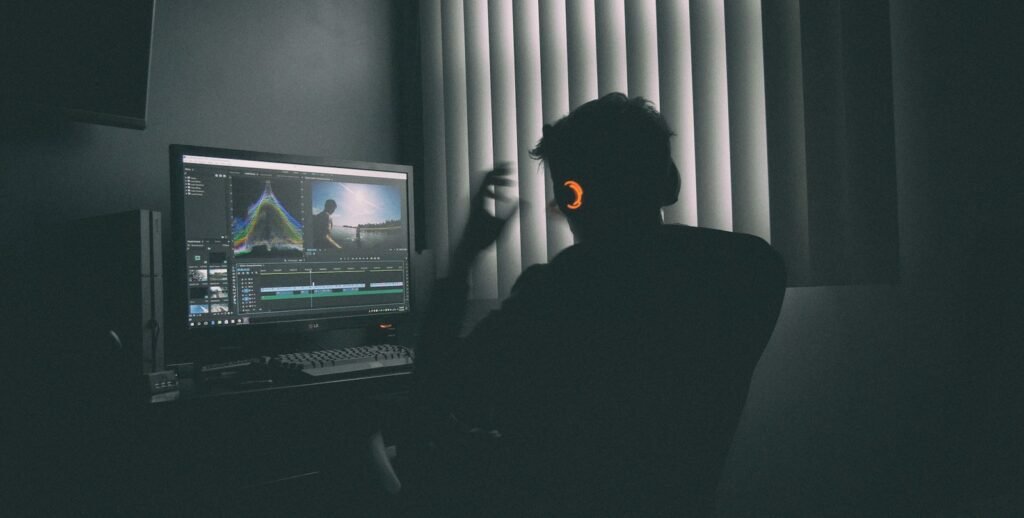
Cover photo: Mark Cruz / Unsplash. Illustrative stock photo.
What content creators want in 2026: freedom, fair pay, and more time to create. Here is how my own six-year rabbit hole connects to what the surveys are telling us.
I went to a buddy’s house to smoke some dabs. Somehow, that turned into six years of teaching myself how to build an online business.
That is honestly how this started.
I had always played video games. When I was younger, I wanted to go to Collins College around Phoenix to become a game designer. I had ideas. I never made it that far.
Then, about six years ago, I went over to a friend’s place. First time there. In his garage was this rack of about eight machines that looked to me like little gaming PCs. Fans going full blast. Loud as fuck.
I had no idea what I was looking at. I waited until the second visit to ask because I did not want to be intrusive. But eventually I had to know: what the hell was he playing that needed eight rigs?
He told me they were Bitcoin miners.
I knew Bitcoin existed. I did not know what a miner was. He explained it, and that opened a door. Around that period, I started following the NFT boom and trying to make my own NFTs. That sent me toward videos about affiliate marketing, dropshipping, and print on demand.
I also watched a lot of Gary Vee’s inspirational content along the way. Those videos were part of the encouragement to keep exploring what I could build.
Then I needed a website. So I started teaching myself WordPress through YouTube, TikTok, and whatever I could find online. I started with Namecheap and eventually moved to Hostinger.
Meanwhile, I still wanted to play Call of Duty and Grand Theft Auto. I loved the montages, funny clips, and ridiculous moments other people were posting. I wanted to make those too.
Okay, how do I livestream? How do I record it? Now how the fuck do I edit it?
I wanted to add memes, cut things together, and make people laugh—even when the gaming session itself was nothing special. Suddenly I was learning streaming, editing, websites, and different ways to earn, all at once.
I built two or three websites, got them looking good, tore them down for one reason or another, and started again. The websites did not always survive. What I learned carried into the next attempt.
Eventually that road brought me to Suno, AI generators, and the tools we work with now. I started using ChatGPT around its launch and kept coming back as it developed. I explored Perplexity and Claude too. ChatGPT became my go-to place to think out loud and work through ideas.
Six years into this, I am still figuring out how to bring those interests together. Gaming. Music. AI. Building things. Finding a niche without cutting away everything that makes me interested in doing it.
“I don’t want to be somebody else to make money. I want to be me to make money.”
That is the thread running through this whole story. And it is why I think what content creators want in 2026 goes deeper than views: a way to offer something people value, support themselves, and keep their own identity in the process.
So when a survey of 5,095 creators finds that 67% earned under $10,000 annually from creating, it lands. [1] I know there is a person behind every one of those answers, trying to work out what comes next.
The dream is having a life left to live
I understand wanting to work for yourself. I understand wanting to provide for your family without feeling like every useful hour already belongs to somebody else.
You want to travel. See some shit. Be present with your kids. Have enough breathing room that an unexpected bill does not hijack the whole month. Make something with your own name on it and have people value what you bring.
For some, that means entertaining people. For others, it means explaining something they know, making music, drawing, streaming a game, or showing somebody how to solve a problem.
There is dignity in ordinary work. There is also dignity in wanting more control over how much of your life it takes. The fear of working yourself into the ground for decades, only to reach retirement with too little money or energy to enjoy it, is real enough to make the creator dream feel powerful.
That is the angle I care about. Behind the word “monetization” is a person asking whether their work can finally buy them some breathing room.
Quality matters. So does the person making it.
Attention is limited. Audiences have endless choices. Uploading something does not create an obligation for strangers to watch it, and effort alone cannot guarantee income.
The goal still has to be good content: entertainment worth somebody’s time, education they can use, art that makes them feel something. You have to give people a reason to come back.
But accepting competition does not mean shrugging at how hard it can be to make the work pay. A person can improve their craft and still struggle with discovery, pricing, distribution, or finding the right offer. Those problems deserve a better answer than “post more.”
A low income figure cannot tell you how talented, serious, or hardworking an individual creator is. These surveys include different kinds of creators; the number does not mean 67% of full-time professionals worked full-time for less than $10,000.
You should not need a technical degree to share something worth watching
Think about the person who works all week, plays games on the weekend, and takes their family to a barbecue. The single mom who likes makeup or unwinds with a game when she finally gets a minute. The person recording in their bedroom with whatever equipment they have. The kid who watches Minecraft videos and thinks, “I want to make something like that.”
There is something beautiful about that starting point. Somebody has an idea, a sense of humor, a skill, or a way of explaining things that connects with another person.
I have learned from all kinds of people in my life. Sometimes they showed me a better way. Sometimes they showed me exactly what not to do. Sometimes we just saw the same thing differently, and that changed how I thought about it.
People have value before an algorithm measures their reach. A view count measures a response to a piece of content. It cannot measure everything a person has to offer.
You should be able to say, “This is me. This is what I know. This is how I do it,” and give the people it resonates with a chance to find you.
Learning the craft is part of that. Becoming an expert in every piece of software surrounding it should not swallow the whole experience. You should not need a technical degree or a production squad just to get a decent video out.
The setup can swallow the reason you started
You start out wanting to share a game or teach a makeup technique. Then you are figuring out audio routing, recording settings, editing, captions, thumbnails, file storage, publishing, analytics, and another app that promises to fix the last five.
Now the person with something to say is troubleshooting why a microphone is recording the ceiling fan like it owes it money.
I like the technical side, and I still know how deep that rabbit hole goes. Imagine approaching it with a good idea, limited spare time, and no interest in becoming the IT department.
A useful creator tool should make the next step easier to understand. A useful tutorial should show the starting point, the result, and what to do when something goes wrong. If the demonstration only works for somebody who already knows everything, who exactly are we helping?
Six years makes this personal
It took me six years to see my first bit of money from this. That is my experience, not a timeline I am predicting for anybody else.
Looking back, I was trying to learn several different businesses and creative skills at once. Every answer seemed to introduce three more questions. Rebuilding a website taught me things, but having a better-looking website did not automatically mean I had figured out how to earn.
I can see the value in what I learned. I can also see why somebody with a job, kids, and a few spare hours might look at that road and feel overwhelmed before they even start.
That is why I want to share usable steps as we build. A clear demonstration could save somebody from spending their whole evening on something we already fought through.
I respect the people who reach the top. Skill, personality, and the work they put in deserve credit. Their success still leaves a practical question for everybody else: how do you build a worthwhile smaller business without needing to become a household name?
Music gives me a way to think about it. Social platforms give artists a way to put their work in front of people themselves. Getting it out there is a huge opportunity. Getting enough people to care—and finding a way for that attention to support you—is another job entirely.
What content creators want in 2026: the numbers
| Finding | Who reported it | Why it matters |
|---|---|---|
| 67% earned under $10,000 annually from creating | CreatorIQ; 5,095 respondents | An audience does not automatically become a paycheck. |
| 62% did not rely on creating as their primary income | CreatorIQ | Many creators must fit production around other work. |
| 14.7% named time management; 14% inconsistent income; 13.9% burnout | Influencer Marketing Factory; 1,000 U.S. creators | These were its three leading pain points. |
| 75% felt human-created content was becoming a premium | Epidemic Sound; 3,000 U.K./U.S. creators | Creators still see value in human identity and craft. |
Sources: [1], [2], [3]. These are separate surveys with different samples and questions. They are not one combined poll, and earnings are not take-home profit.
Creator income: the reality check
Earned under $10,000 annually from creating 67%
Content was not the primary income source 62%
CreatorIQ / Influencers.club, 2026; 5,095 respondents. Separate questions.
1. Creators want paid work they can count on
CreatorIQ identified inconsistent brand deals as the leading barrier to growing a creator business. Compensation also ranked first for partnership satisfaction. [1]
My read: creators need a repeatable way to find suitable work, explain their value, follow up, and get paid. A random free product does very little for next month’s bills.
A useful sponsor pitch should show who watches, what the creator can deliver, and why the product fits. “I have followers” leaves the brand to figure out the entire business case.
For your own operation, start a simple deal tracker: brand, contact, proposed deliverables, fee, last contact, next step, and payment status. Boring? Absolutely. So is hunting through six inboxes for the person who owes you money.
We are also following the tools connecting this business data to AI in our impact.com MCP coverage.
2. Creators want their damn time back
The Influencer Marketing Factory’s top three reported pain points sit remarkably close together: time management at 14.7%, inconsistent income at 14%, and burnout at 13.9%. [2]
The top three creator pain points
Time management 14.7%
Inconsistent income 14%
Burnout 13.9%
Influencer Marketing Factory, 2026; 1,000 U.S. creators. Scale: 0–100%.
Consider a gaming stream. Going live is one job. Finding the good moments, trimming them, fixing captions, making covers, writing titles, and preparing each upload can become another shift.
Imagine being able to turn that recording into a few good clips without spending your entire next evening hunting through it. You still choose what represents you. You still decide whether the joke lands or the tutorial makes sense. The repetitive work takes less of your time.
That is the kind of result I want our workflows to help deliver. It is a build goal, not a claim that we already have a flawless system. The test is whether an ordinary creator can use it, understand the output, and spend less time fixing it than doing the job manually.
3. Creators want AI that helps without flattening their personality
Epidemic Sound found 89% of its respondents felt some pressure to use AI. CreatorIQ, however, reported that nearly two-thirds of its respondents did not feel pressure to use it to stay competitive. [3] [1]
That difference matters. Different samples and wording can produce very different answers. Anyone claiming every creator feels the same about AI is sanding off the inconvenient parts.
Here is the test I would use: can the tool remove a tedious task while leaving the creative decision in your hands?
Let it draft captions. Check the names. Let it suggest clips. Watch the setup and payoff. Let it clean audio. Listen for damage. A shortcut that creates an hour of repairs has failed the assignment.
Our local AI creator stack explores this territory. “Local” still has costs in hardware, setup, and maintenance. Count those too.
4. Creators want growth they can understand
My view: useful analytics should lead to a decision. A dashboard full of upward arrows looks lovely. What should you change on the next upload?
Start with a specific question: did the opening lose viewers, did the title promise something the video failed to deliver, or did people watch without taking the next step?
Compare similar formats over similar time windows. Change one meaningful thing and write down what happened. One lucky upload is a clue; repeated results give you a stronger reason to act.
The same standard belongs in tool reviews: show the task, cost, output, repairs, and time saved. A glossy demo alone tells the audience very little about Tuesday afternoon when the software starts acting possessed.
5. Creators want a business they can keep building
Epidemic Sound reported that 41% wanted a sustainable independent business or to grow into a media brand or studio. Its survey also found 73% worried unclear licensing could limit future opportunities. [3]
My practical takeaway is to build a clear next step beyond the post: an email signup with a useful promise, a service people understand, or a product that answers a recurring audience question.
Choose one to test. Launching seven empty memberships does not create seven income streams. It creates seven places to feel behind.
Keep your project files and records of the assets you use. Before adding another monthly tool, give it a specific job and measure whether it earns its place. That is the thinking behind our AI subscription audit.
Why we are building tools, workflows, and demonstrations
My goal with MazHatterIX is to make it easier for other people to come up. That is why we work on automations, connect tools, build workflows, and show the process.
I want somebody to see what we did and think, “Okay. I can take that step.” Maybe they make their first clean recording. Maybe they reclaim an evening. Maybe they finally get a piece of work finished that was sitting in a folder for months.
The demonstrations need to include the mistakes, the costs, and the parts that still need a human. Showing a perfect-looking result while hiding three hours of repairs does nothing for the person trying to follow along.
We are still building and learning ourselves. This is one creator talking to other creators, sharing what can make the road easier as we figure it out.
The bad and the bullshit: easier tools cannot promise you a living
A better setup can remove friction. It cannot guarantee that people will watch, return, or buy. Quality, audience fit, discoverability, and a workable way to earn still matter.
Platform payouts are only one possible income source. What views earn varies; there is no single payout rate that tells every creator’s story. Sponsorships, services, affiliate links, and products involve their own work too.
I am not going to tell somebody that installing a workflow means they can quit their job. The aim is to give them a clearer, more manageable way to try—and honest evidence about what happens next.
The creative challenge is already hard enough. We can at least work on making the technical side less of a damn obstacle course.
The creators I learned from—and why that matters
Santrel Media, Adam Enfroy, and Gary Vee were among the creators I watched along this road. I also follow Jesse Hull at AI Guerrilla. These are some of the people and resources behind my curiosity about what I could build.
Below are three videos I picked to share, including one from Ferdy Korpershoek. They give you a sense of the subjects I have been exploring. These are current examples, not a claim that these exact uploads were around when I started six years ago.
What matters to me is that people can pass useful knowledge along this way. Somebody explains a process, you try it, and you have a starting point you did not have yesterday. You still have to test the advice against your own time, budget, and results.
Santrel Media: Affiliate Marketing Tutorial For Beginners 2026 (Step by Step)
Watch Santrel Media’s tutorial.
Adam Enfroy: The Complete AI YouTube Blueprint for 2026 (3 Hour Course)
Ferdy Korpershoek: Affiliate Marketing for Beginners
Watch Ferdy’s full course. The original title includes a six-figure earnings pitch; sharing it here is not a promise of those earnings or an endorsement of every claim in the course.
TheBurntPeanut: the work before the breakout
I also watch TheBurntPeanut’s livestreams. For me, the appeal is the personality and the entertainment built around the game. That connects directly to wanting to make something entertaining even when the gameplay itself is nothing special.
Streams Charts’ account of his rise dates his first Twitch streams to 2019 and his more committed push to 2024. It reports that he had already passed 200,000 Twitch followers by mid-2025, with Tarkov helping build his audience and the Battlefield 6 beta bringing another surge. ARC Raiders then accelerated that growth after its late-October 2025 release.
That puts roughly six years between the reported first streams and the ARC Raiders surge—but it would be wrong to describe all six as full-time streaming to nobody. He already had substantial momentum before ARC.
My takeaway is that the game, timing, accumulated practice, and a recognizable personality can come together. We see the moment somebody takes off more easily than the work that came before it. His result cannot promise ours, but his path is more useful to understand than the idea that he appeared out of nowhere.
Watch: the creator workload problem has history
This YouTube Creators master class with Kati Morton was published in 2018. It is background on creator burnout, not evidence for the 2026 statistics.
What to do with this this week
- Find your biggest drain. Track where your content hours actually go.
- Fix one repeatable task. Judge the result after corrections, not at the first export.
- Connect content to one clear offer. Make the next step obvious and useful.
- Review the outcome. Did you save time, deliver better work, or earn revenue? Keep the answer honest.
What content creators want in 2026 is a chance to turn work people value into a life they can sustain. The surveys measure parts of that struggle. The bigger meaning—the freedom, the family time, the desire to be valued for what you bring—is my reading of why it matters.
Making better content is part of the job. So is learning how that work earns. We should be able to talk honestly about both without selling people a fantasy or treating their ambition like a joke.
People want to make something that matters, support the people they love, and have some fucking life left to enjoy. That dream deserves useful help and honest numbers.
What’s eating your creator life right now: finding paid work, editing, growth, or keeping up? Tell us which one—and what you have already tried.
Sources and research notes
This is research-led commentary, with AI assistance in research and drafting. Workflow suggestions are editorial recommendations, not tested results from these studies. The origin story and six-year account are the author’s recollections, not independently verified chronology or survey findings. Accessibility and creative freedom are the author’s perspective; the studies do not directly measure every motivation discussed here. The reports were published in 2026; they were not all released today. Their publishers sell services to this industry.
- CreatorIQ / Influencers.club: The State of Creators 2026. 5,095 respondents; fieldwork May 29–June 29, 2026. Income, brand deals, and AI-pressure findings.
- Influencer Marketing Factory: official survey pain-point summary. 1,000 U.S. creators; time, income, and burnout percentages. Its report methodology dates survey responses to January 2026.
- Epidemic Sound: The Future of the Creator Economy Report 2026 announcement. 3,000 U.K./U.S. creators aged 18+; Sapio Research fieldwork March–April 2026; published May 28.
YOUR TAKE
Agree, disagree, or tried it yourself? Tell us what you think.